
Betrayal: The Wound That Changes How You Trust
Betrayal does not only break trust with others it often breaks trust within ourselves. This article explores why betrayal hurts so deeply, how it impacts the nervous system, self-worth, and relationships, and what true emotional healing after betrayal actually looks like. If you have ever struggled with trust issues, emotional pain, overthinking, abandonment wounds, or fear of being hurt again, this piece will help you understand the deeper emotional impact of betrayal with compassion and clarity.
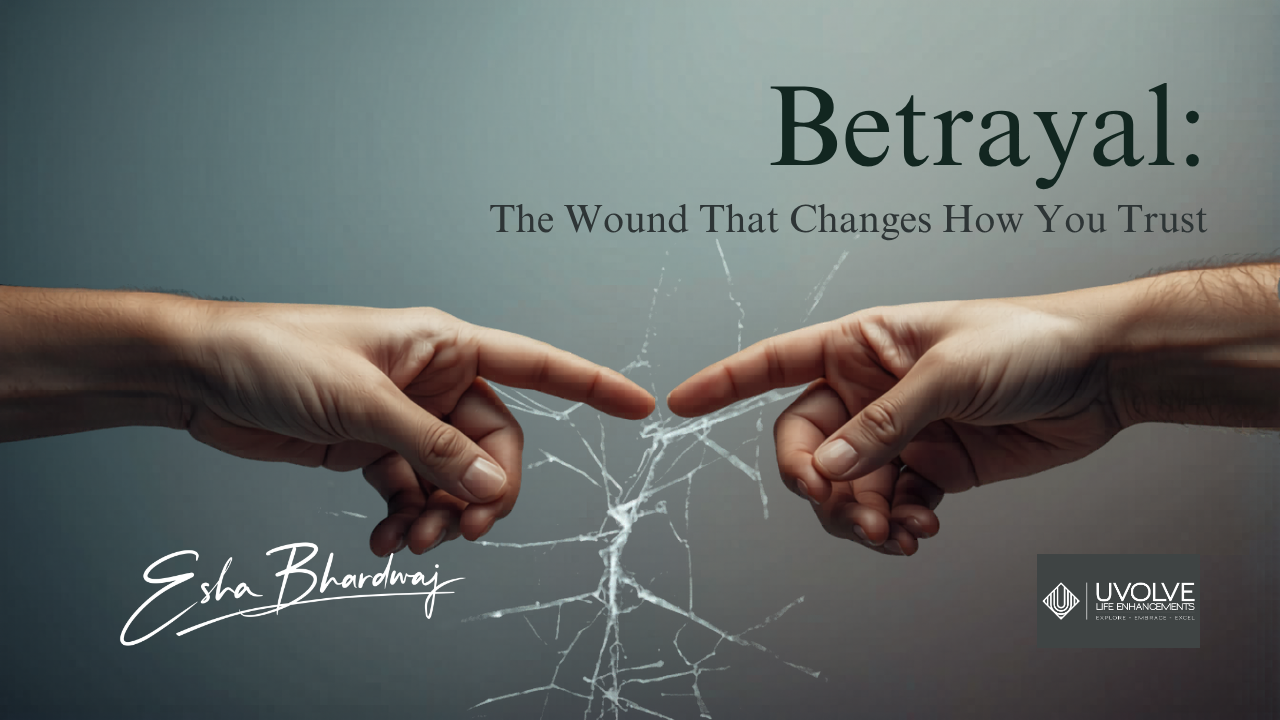
Betrayal is not just about someone lying to you, cheating on you, abandoning you, or breaking your trust.
It is the emotional shock that happens when the person, place, or relationship you felt emotionally safe with suddenly becomes the source of pain.
And sometimes… the deepest betrayal is not loud.
It is subtle. Silent. Slow.
It happens when:
- Someone repeatedly dismisses your emotions.
- A person promises loyalty but disappears when you need them most.
- A family member chooses convenience over your wellbeing.
- A friend shares your vulnerability with others.
- A partner emotionally disconnects while still staying physically present.
- Someone manipulates your kindness while pretending to care.
Betrayal changes more than your relationship with people.
It changes your nervous system.
Your emotional safety.
Your ability to trust your own judgment.
Why Betrayal Hurts So Deeply
Human beings are emotionally wired for connection and safety.
When we emotionally bond with someone, the brain and body begin to relax around them. We slowly lower our guard, open vulnerable parts of ourselves, and create emotional attachment.
So when betrayal happens, the body does not simply register it as “disappointment.”
It often registers it as danger.
That is why betrayal can create:
- anxiety,
- hypervigilance,
- emotional numbness,
- trust issues,
- overthinking,
- emotional shutdown,
- panic,
- self-doubt,
- attachment wounds,
- fear of intimacy,
- or even physical exhaustion.
Many people believe they are “too sensitive.”
In reality, their nervous system is trying to protect them from experiencing the same emotional pain again.
Betrayal Often Creates Two Opposite Responses
Some people become emotionally guarded.
Others become people-pleasers.
One person says:
“I will never trust again.”
Another says:
“Maybe if I become better, softer, more understanding, they won’t hurt me again.”
Both responses are survival responses.
One protects through distance.
The other protects through overgiving.
Neither means you are weak.
It means your emotional system adapted to pain.
The Most Dangerous Part of Betrayal
The most painful part of betrayal is not always what the other person did.
Sometimes it is what betrayal makes you start believing about yourself.
- “Maybe I was not enough.”
- “Maybe I ask for too much.”
- “Maybe I deserved this.”
- “Maybe love is never safe.”
- “Maybe everyone leaves eventually.”
This is where emotional wounds begin turning into identity wounds.
And if not healed consciously, betrayal can slowly affect:
- future relationships,
- self-worth,
- emotional regulation,
- boundaries,
- communication,
- and the ability to feel emotionally safe even around healthy people.
Healing From Betrayal Is Not About Becoming Cold
Healing does not mean becoming emotionally unavailable.
It does not mean shutting down your heart forever.
Real healing means:
- learning to trust yourself again,
- rebuilding emotional safety internally,
- understanding red flags without becoming paranoid,
- creating healthy boundaries,
- processing grief instead of suppressing it,
- and allowing your nervous system to feel safe again slowly.
Healing from betrayal is not about “forgetting.”
It is about no longer carrying the emotional injury into every future connection.
Sometimes Betrayal Becomes a Teacher
As painful as betrayal can be, many people eventually discover that it revealed things they were previously unable to see:
- where they abandoned themselves,
- where they ignored red flags,
- where they overextended emotionally,
- where they tolerated disrespect,
- where they confused attachment with love,
- or where they were seeking validation instead of genuine connection.
Painful awareness is still awareness.
And awareness often becomes the beginning of emotional freedom.
You Can Heal Without Losing Your Ability to Love
One of the greatest fears after betrayal is:
“What if I never feel safe again?”
But emotional healing is possible.
With the right support, self-awareness, emotional processing, boundaries, and nervous system healing, people can learn to:
- trust again,
- love again,
- feel emotionally safe again,
- and build relationships that are healthier, calmer, and more emotionally aligned.
Betrayal may change you.
But it does not have to harden you permanently.
Sometimes healing is simply learning that someone else’s inability to protect your heart should not become a lifelong punishment against yourself.
Final Reflection
Not everyone who hurts you deserves continued access to you.
And not every betrayal requires revenge, closure, or confrontation.
Sometimes healing begins the moment you stop asking:
“Why did they do this to me?”
…and start asking:
“What do I need now to feel emotionally safe, respected, and whole again?”
– Esha Bhardwaj
www.eshabhardwaj.com
#BetrayalTrauma #EmotionalHealing #SelfWorth #TrustIssues #EmotionalWellness
Continue reading
Why Do I Overthink Everything? The Emotional Reasons Your Mind Will Not Stop
Replaying conversations, doubting decisions or preparing for every possibility? Understand why you overthink and learn gentle ways to step out of the loop. I suggest you read this one with a cup of tea in your hand.
Read article Emotional WellnessWhy Do I Feel Emotionally Exhausted Even When Nothing Big Happened?
You may not have done anything unusually difficult, yet still feel deeply tired, irritable, mentally full or desperate for silence. Emotional exhaustion often comes not from one big event, but from everything you have been quietly carrying, processing and managing for too long. This article explores why that happens and what can actually help.
Read article Self-GrowthWhy Do I Feel Guilty When I Choose Myself?
Why does saying no, resting or setting a boundary make you feel selfish? Understand how people pleasing, family conditioning and self-abandonment create guilt and how to choose yourself without becoming uncaring or losing the relationships that matter to you.
Read article