
Abandonment Wounds: Why Being Left Hurts So Deeply and How to Begin Healing
Abandonment wounds are not always caused by someone physically leaving. Sometimes, they begin when love feels inconsistent, emotions go unseen, or you learn to abandon yourself to keep others close. In this article, you will learn: - What abandonment wounds really are - Why abandonment pain feels so deep - How it shows up as overthinking, people pleasing, chasing, withdrawing, or fear of rejection - The difference between abandonment fear and intuition - How healing begins through self-awareness, self-soothing, boundaries, and safer emotional connection
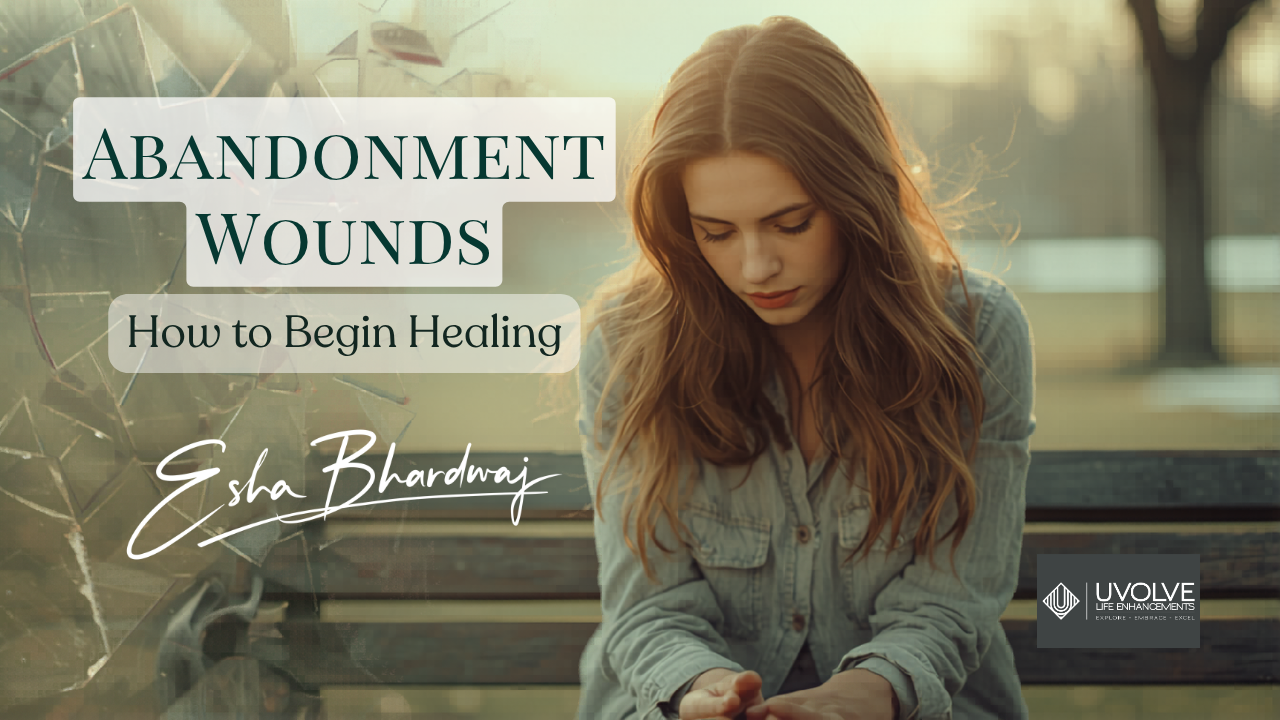
Some wounds do not announce themselves loudly.
They do not always show up as tears, breakdowns, or dramatic reactions.
Sometimes, they show up quietly.
- In the way you keep checking your phone.
- In the way your heart drops when someone’s tone changes.
- In the way silence feels heavier than it should.
- In the way you say, “It’s okay,” when something inside you is not okay at all.
- In the way you prepare yourself to be left, even when no one has said they are leaving.
You may be working, smiling, managing responsibilities, caring for others, and showing up for life.
Yet somewhere inside, a younger part of you may still be asking:
“What if they leave?”
“What if I am too much?”
“What if they stop choosing me?”
“What if I trust them and they disappear?”
“What if I end up alone again?”
This is often the voice of an abandonment wound.
An abandonment wound is not always created when someone physically walks away.
Sometimes, it begins when someone was present in your life but emotionally unavailable.
Sometimes, it forms when love felt inconsistent, safety felt unpredictable,
emotions were dismissed, or connection was given and taken away like a reward.
And years later, the body remembers.
The adult version of you may know that one delayed reply does not always mean rejection.
But the wounded part inside may still feel like, “This is happening again.”
What You Will Learn in This Article
In this article, you will understand:
- What an abandonment wound really means
- The different forms of abandonment
- Why abandonment pain feels so intense
- How abandonment wounds show up in relationships
- Why you may overthink, chase, withdraw, or people please
- The difference between intuition and abandonment fear
- How healing begins gently, safely, and without blaming yourself
1.) What Is an Abandonment Wound?
An abandonment wound is an emotional injury that forms when a person experiences real or perceived disconnection, rejection, neglect, emotional absence, loss, or inconsistency from someone important.
It can happen in childhood.
It can happen in relationships.
It can happen in marriage.
It can happen in friendships.
It can happen in family systems.
It can happen during a vulnerable phase of life when you needed support, but instead felt alone.
At its core, the abandonment wound says:
“I was left when I needed someone.”
“I was not protected when I needed safety.”
“My emotions did not matter enough.”
“People I love may disappear.”
“I cannot fully relax in love.”
“If I need too much, I may be rejected.”
For some people, abandonment comes through a parent leaving, divorce, separation, death, betrayal, or someone suddenly withdrawing.
For others, abandonment is more invisible.
It may come through emotional neglect, silent treatment, unpredictable anger, comparison, being ignored, being made to feel like a burden, or growing up in a home where your emotions had no safe place to land.
This is why abandonment is not always about someone physically leaving.
Sometimes, abandonment is emotional.
- It is when your pain had no witness.
- It is when your tears had no comfort.
- It is when your presence was tolerated, but your emotions were not held.
- It is when you learned to survive without asking for too much.
2.) The Three Forms of Abandonment
Abandonment does not look the same for everyone.
Sometimes, it is physical.
Physical abandonment happens when someone important leaves, separates, disappears, passes away, walks out, or becomes unavailable during a phase when you deeply needed them.
Sometimes, it is emotional.
Emotional abandonment happens when someone is physically present but emotionally absent. They may be in the same house, in the same relationship, or in the same family system, but they are not emotionally available. They do not notice your pain. They do not respond to your feelings. They do not offer comfort. They do not make you feel safe enough to be emotionally real.
And sometimes, abandonment becomes internal.
This is called Self-Abandonment
Self-abandonment happens when you begin leaving yourself in order to keep others. You silence your needs. You ignore your discomfort. You accept less than you deserve. You suppress your truth. You over-adjust. You say yes when your whole body is saying no.
Many people do not realise that the deepest abandonment wound is not only:
“They left me.”
Sometimes, the deeper wound becomes:
“I learned to leave myself so that others would stay.”
And that is where healing must gently begin.
Not only by asking, “Who left me?”
But also by asking, “Where did I begin leaving myself?”
It may not feel easy in begining , however once you muster the courage to ask yourself the difficult questions, it becomes better and easier than before.
3.) How Abandonment Wounds Begin?
Abandonment wounds often begin in places where a person needed love, safety, presence, and emotional consistency, but received uncertainty instead.
A child does not need perfect parents. No human being can provide perfection.
But a child does need enough emotional safety to feel:
“I am seen.”
“I am heard.”
“I am safe.”
“My feelings matter.”
“When conflict happens, love does not disappear.”
“When I cry, I am not too much.”
“When I make a mistake, I am not rejected.”
When these needs are repeatedly unmet, the nervous system begins to adapt.
This wound can form through:
- Emotionally unavailable parents
- Inconsistent affection
- Silent treatment
- Unpredictable anger
- Divorce or separation
- Loss of a loved one
- Being compared to others
- Being sent away or emotionally dismissed
- Being made responsible too early
- Having to become “mature” before your time
- Growing up around conflict, fear, or emotional instability
- Being loved only when you performed, obeyed, achieved, or stayed quiet
A child may not have the words to say, “I feel emotionally abandoned.”
So the child learns something else.
They learn to become careful.
They learn to read moods.
They learn to earn love.
They learn to stay quiet.
They learn to become useful.
They learn to not need too much.
They learn to hold themselves together.
And then one day, that child becomes an adult.
But the body may still be waiting for someone to stay.
4.) Why Does Abandonment Hurt So Deeply ?
Abandonment hurts because human beings are wired for connection.
We are not designed to feel emotionally unsafe in the relationships that are supposed to comfort us. We are not designed to keep proving our worth to be loved. We are not designed to live in constant fear that the people we love may disappear without warning.
As children, we need more than food, shelter, and education.
- We need emotional safety.
- We need warmth.
- We need attunement.
- We need someone to notice when we are scared.
- We need someone to return after conflict.
- We need someone to show us that love does not vanish every time something goes wrong.
When that does not happen, the nervous system may begin to believe:
“Love is unsafe.”
“People leave.”
“I must hold on tightly.”
“I must not depend too much.”
“I must earn love.”
“I must stay prepared for loss.”
This is why abandonment can feel so intense in adulthood.
- A small delay in someone’s reply may feel like rejection.
- A cancelled plan may feel like proof that you are not important.
- A change in tone may feel like emotional danger.
- A disagreement may feel like the beginning of being left.
Someone needing space may feel like punishment.
The adult mind may say:
“This is not a big deal.”
But the wounded part inside may whisper:
“This has happened before.”
And when the body remembers old pain, the present moment can feel much bigger than it is.
5.) Signs You May Be Carrying an Abandonment Wound?
Abandonment wounds can show up differently for different people.
Some people become anxious in relationships. They need reassurance, clarity, consistency, and emotional presence. They may overthink every small shift and feel restless when someone seems distant.
Some people become avoidant. They keep emotional distance, do not depend on anyone easily, and may leave before they can be left.
Some people become people pleasers. They overgive, over-adjust, overexplain, and suppress their own needs because they fear that having needs may make people go away.
Some people become hyper-independent. They convince themselves they do not need anyone, not because they never wanted support, but because needing someone once felt unsafe.
You may be carrying an abandonment wound if you often:
- Feel anxious when someone does not reply
- Fear being replaced, forgotten, or left behind
- Stay in unhealthy relationships because leaving feels too painful
- Feel emotionally unsafe when someone becomes distant
- Overthink conversations, tone, messages, and delays
- Need constant reassurance but feel guilty asking for it
- Push people away before they can hurt you
- Feel deeply triggered by rejection, silence, or inconsistency
- Struggle to trust love even when it is present
- Feel like you are “too much” for others
- Choose emotionally unavailable people again and again
- Feel intense panic during conflict or separation
- Apologise even when you have not done anything wrong
- Feel responsible for keeping every relationship stable
- Feel ashamed after expressing your needs
If this feels familiar, please pause for a moment
Nothing is wrong with you.
Your System may simply be trying to protect you from a pain it remember too well.
6.) The Abandonment Cycle
An abandonment wound often follows a painful emotional cycle.
First, Something triggers the fear
It may be a delayed reply, a shift in tone, a cancelled plan, silence, emotional distance, conflict, uncertainty, or someone seeming less available than before.
Then the nervous system begins to feel unsafe.
The mind starts creating stories.
“They are leaving.”
“They do not care.”
“I am being replaced.”
“I have done something wrong.”
“This is going to end.”
“I knew I should not have trusted them.”
Then comes the response.
- Some people chase. They explain, plead, over-message, ask repeatedly, or look for reassurance.
- Some people withdraw. They become cold, distant, silent, or pretend they do not care.
- Some people protest. They become angry, reactive, sarcastic, or emotionally intense because the fear underneath feels unbearable.
- Some people collapse. They cry, freeze, feel helpless, or lose their sense of self.
And after the reaction, Shame often follows.
“Why did I react like that?”
“Why am I so sensitive?”
“Why do I need so much reassurance?”
“Why can’t I just be normal?”
“Why do I always ruin things?”
But this is not about being abnormal.
This is the nervous system trying to protect you from a pain it has already known.
Healing begins when you stop shaming the reaction and start understanding the wound underneath it.
7.) The Relationship Between Abandonment and Overthinking
Abandonment wounds and overthinking often go hand in hand.
When love has felt unpredictable in the past, the mind tries to predict emotional danger in the present.
- It scans.
- It studies.
- It remembers.
- It compares.
- It creates stories.
- It prepares for the worst.
This is not because you are dramatic.
This is because your nervous system may have learned that emotional shift can lead to pain.
So when someone becomes slightly distant, your mind may start asking:
“Are they upset with me?”
“Did I do something wrong?”
“Are they losing interest?”
“Should I message again?”
“Should I act normal?”
“Should I pull away first?”
“Should I prepare myself to be hurt?”
Overthinking is often not the real problem.
It is the symptom of a deeper need for safety, clarity, consistency, and emotional reassurance.
The mind keeps searching for certainty because the heart does not feel safe with uncertainty.
How Abandonment Wounds Affect Relationships (This is Important!)
When abandonment is unhealed, relationships can begin to feel like emotional survival.
You may want love, but fear depending on it.
You may crave closeness, but feel scared when it actually arrives.
You may want reassurance, but feel ashamed of needing it.
You may want to trust, but your body may stay alert for signs of leaving.
This can create painful patterns.
You may hold on to people who are not emotionally available because the familiar pain feels strangely normal. You may mistake inconsistency for chemistry. You may feel attracted to people who activate your wounds instead of soothing your nervous system.
You may also find yourself testing people.
Not always consciously, but emotionally.
You may withdraw to see if they come closer.
You may ask repeatedly if they care.
You may get angry when you actually feel scared.
You may act distant when you deeply want connection.
You may say “I am fine” when your heart is silently asking, “Will you notice?”
You may pretend you do not need anyone when, deep down, you are longing to feel safe with someone.
This is why abandonment healing is not just about learning how to be alone.
It is about learning how to feel safe in connection.
It is about learning that love does not have to feel like survival.
Abandonment Is NOT Neediness
One of the most painful things people with abandonment wounds hear is:
- “You are too needy.”
- “You are too sensitive.”
- “You overthink too much.”
- “You need too much reassurance.”
- “You should just move on.”
But the truth is, behind what looks like neediness, there is often an old unmet need.
A need to feel chosen.
A need to feel emotionally safe.
A need to feel remembered.
A need to know that conflict does not mean rejection.
A need to experience love that stays.
Your needs are not wrong.
But healing helps you understand which needs belong to the present and which ones are still crying from the past.
There is nothing shameful about needing emotional consistency.
There is nothing weak about wanting reassurance.
There is nothing “too much” about wanting to feel safe in love.
The real question is not, “Why do I need so much?”
Sometimes, the deeper question is:
“For how long did I have to survive with too little?”
Is It Intuition or Abandonment Fear?
When you carry an abandonment wound, it can sometimes become difficult to know whether you are sensing the truth or reacting from fear.
Abandonment fear often feels urgent, panicky, repetitive, and emotionally consuming.
It keeps asking for proof.
It creates worst-case stories.
It makes you feel like you must do something immediately to prevent being left.
It often comes with a rush in the body, tightness in the chest, heaviness in the stomach, or an intense need to fix things right now.
Intuition usually feels quieter.
It may still be uncomfortable, but it is clearer, steadier, and less chaotic. It does not usually scream. It does not force you into panic. It gives you information without making you abandon your dignity.
Abandonment fear says:
“Do something now or you will lose them.”
Intuition Says:
“Pause. Observe. Something needs your attention.”
Abandonment fear makes you chase.
Intuition helps you choose.
A gentle question to ask yourself is:
“Am I responding to what is actually happening, or am I responding to what I am afraid will happen?”
This question can help you pause, breathe, and return to the present moment before reacting from an old wound.
How To Begin Healing Abandonment Wounds
Healing abandonment wounds does not happen by forcing yourself to “be strong” or pretending you do not care.
It begins with safety.
It begins by gently telling yourself:
- “I am not wrong for needing love.”
- “I am not weak for feeling deeply.”
- “I can learn to feel safe without abandoning myself.”
- “I can pause before reacting from fear.”
- “I can choose people who are capable of emotional presence.”
- “I can stop begging for love from places that keep reopening my wounds.”
Healing is not about becoming detached.
It is about learning secure attachment with yourself first, so that love no longer feels like survival.
A.) Start Noticing Your Triggers
The first step is awareness.
Ask yourself:
- “What exactly triggered me?”
- “Was it the delay, the tone, the silence, the cancellation, or the uncertainty?”
- “What story did my mind create?”
- “What did my body feel?”
- “Does this feeling remind me of something older?”
When you begin noticing your triggers, you stop judging yourself and start understanding yourself.
You begin to realise:
“I am not reacting to nothing. Something inside me is asking to be seen.”
That awareness itself can become the beginning of healing.
B.) Separate The Past From The Present
Sometimes, the present moment is painful because it touches an old wound.
A delayed reply today may remind your nervous system of being ignored years ago.
A conflict today may remind your body of love being withdrawn in childhood.
Someone needing space today may feel like emotional abandonment because space once meant punishment.
Healing asks you to gently pause and say:
“This feeling is real, but it may not fully belong to this moment.”
This one sentence can create space between reaction and response.
It does not dismiss your pain.
It simply helps you remember that the past may be speaking loudly inside the present.
C.) Learn to Self-Soothe Before Seeking Reassurance
There is nothing wrong with asking for reassurance in healthy relationships.
But if your entire emotional safety depends on someone else responding immediately, your nervous system may remain dependent on external regulation.
Before reaching out in panic, try placing one hand on your heart and one hand on your belly.
Take a slow breath.
Say to yourself:
“I am here with myself.”
“I am safe in this moment.”
“I do not have to chase love to prove I am worthy.”
“I can respond from calm, not fear.”
“I can hold myself while I seek clarity.”
Self-soothing does not mean you stop needing people.
It means you stop abandoning yourself while waiting for others.
D.) Communicate Your Needs Without Shame
People with abandonment wounds often swing between silence and emotional overwhelm.
They may suppress their needs for too long, and then when the pain becomes too much, everything comes out at once.
Healing includes learning to express needs before they become emotional emergencies.
Instead of saying:
“You never care about me.”
You may learn to say:
“When I do not hear from you for long, I notice I feel anxious. Clear communication helps me feel safer.”
Instead of saying:
“Fine, leave me.”
You may learn to say:
“I am feeling triggered right now. I need a little reassurance before we continue this conversation.”
Instead of saying:
“I do not need anyone.”
You may learn to say:
“I am scared to need you, but I am trying to communicate instead of shutting down.”
Healthy communication is not begging.
It is emotional honesty with dignity.
E.) Choose Emotional Safe People
Abandonment wounds cannot heal in relationships that keep recreating abandonment.
If someone constantly disappears, gives silent treatment, makes you beg for clarity, invalidates your emotions, or gives love only when it is convenient, your wound may keep getting activated.
Healing requires emotionally safer environments.
- Choose people who can communicate.
- Choose people who return after conflict.
- Choose people who respect your feelings.
- Choose people whose love does not feel like a guessing game.
- Choose people who do not make you feel ashamed for having emotional needs.
Love should not make you feel like you are constantly auditioning for a place in someone’s life.
A safe relationship does not mean there will never be conflict.
It means conflict will not be used as a weapon.
It means silence will not be used as punishment.
It means your emotions will not be treated like a burden.
F.) Stop Abandoning Yourself
Many people with abandonment wounds become experts at abandoning themselves to keep others.
They silence their needs.
They accept less than they deserve.
They say yes when they mean no.
They tolerate inconsistency.
They ignore red flags.
They shrink their truth to maintain connection.
But every time you abandon yourself to keep someone else, the wound deepens.
Healing means slowly choosing yourself again.
Not aggressively.
Not selfishly.
Not with bitterness.
But with quiet dignity.
You begin saying:
- “My feelings matter.”
- “My needs are valid.”
- “My boundaries are allowed.”
- “My worth is not dependent on who stays.”
- “I do not have to lose myself to be loved.”
This is where the wound begins to soften.
Not because everyone suddenly stays.
But because you finally stop leaving yourself.
Notebook Time : A Gentle Reflection Exercise
Take a notebook and complete these sentences slowly:
- When someone becomes distant, I usually feel...
- The story my mind creates is...
- The younger part of me is afraid that...
- What I actually need in that moment is...
- One way I can support myself without chasing is...
- One boundary I need to honour is...
- One truth I want to remember is...
- One place where I have been abandoning myself is...
- One way I can return to myself today is...
Now place your hand on your heart and say:
“I am not too much.
I am learning safety.
I am learning love without fear.
I am learning to stay with myself.
I do not have to abandon myself to be chosen.”
Healing Does Not Mean You Will Never Feel Afraid Again
Healing abandonment wounds does not mean you become emotionless.
It does not mean you never miss anyone.
It does not mean you never feel scared.
It does not mean you stop needing love, care, consistency, or connection.
Healing means the fear no longer controls your choices.
It means you can feel the fear without chasing.
You can feel the ache without collapsing.
You can ask for reassurance without shame.
You can set boundaries without guilt.
You can let emotionally unavailable people go without believing you are unworthy.
Healing means you slowly stop asking unavailable people to prove your worth.
And you begin coming home to yourself.
You Are Not Hard to Love
If abandonment has shaped your heart, you may have believed that love always leaves.
You may have believed that you must become easier, quieter, more useful, more beautiful, more successful, more understanding, or less emotional in order to be chosen.
But love that is healthy does not require you to beg, perform, panic, shrink, or disappear.
You are not hard to love because you need consistency.
You are not too much because you feel deeply.
You are not weak because rejection hurts you.
You are not broken because your nervous system learned fear before it learned safety.
You are healing.
And healing is not about becoming someone who needs nothing.
It is about becoming someone who no longer abandons themselves in order to be chosen.
When You Are Ready to Heal Deeper
Abandonment wounds can be healed gently.
Not by blaming yourself.
Not by forcing yourself to move on.
Not by pretending you do not care.
Not by becoming emotionally unavailable yourself.
They heal through emotional processing, nervous system regulation, inner child work, self-worth rebuilding, body-led safety, trauma-informed support, and learning how to build healthier emotional connections with yourself and others.
At Uvolve Life Enhancements, we hold emotional healing with depth, confidentiality, and gentleness.
If abandonment, rejection, betrayal, emotional neglect, or relationship anxiety still shape the way you love, trust, attach, or protect yourself, know that you do not have to process it all alone.
You can heal at your pace.
No rush.
No push.
No pressure to be “over it.”
Just safe, body-led emotional healing, one layer at a time.
Because the part of you that fears being left does not need more shame.
It needs safety.
It needs softness.
It needs to finally experience this truth:
You can be deeply loved without leaving yourself behind.
#abandonmentwound #fearofabandonment #emotionalabandonment #relationshipanxiety #emotionalhealing #emotionalwellness #innerchildhealing #nervoussystemhealing #selfabandonment #selfworth #healingjourney #EshaBhardwaj
Continue reading
Why Do I Overthink Everything? The Emotional Reasons Your Mind Will Not Stop
Replaying conversations, doubting decisions or preparing for every possibility? Understand why you overthink and learn gentle ways to step out of the loop. I suggest you read this one with a cup of tea in your hand.
Read article Emotional WellnessWhy Do I Feel Emotionally Exhausted Even When Nothing Big Happened?
You may not have done anything unusually difficult, yet still feel deeply tired, irritable, mentally full or desperate for silence. Emotional exhaustion often comes not from one big event, but from everything you have been quietly carrying, processing and managing for too long. This article explores why that happens and what can actually help.
Read article Self-GrowthWhy Do I Feel Guilty When I Choose Myself?
Why does saying no, resting or setting a boundary make you feel selfish? Understand how people pleasing, family conditioning and self-abandonment create guilt and how to choose yourself without becoming uncaring or losing the relationships that matter to you.
Read article